Jeremy Maher Phoenix Home Remodeling: How to Check an Arizona Contractor License
Jeremy Maher, Co-Founder & COO of Phoenix Home Remodeling in Chandler, Arizona.
When homeowners start interviewing contractors in the Phoenix metro area, licensing is one of those topics people think they already understand. They do a quick search, find a license number, and assume the hard part is done. Then the project hits friction, communication slows down, and suddenly everyone is comparing notes on what the license really covers.
Jeremy Maher looks at this problem the way many remodeling pros wish more people did, planning-first. Before anyone signs anything, you want to verify that the contractor can legally perform the work they are proposing, that the registration is in good standing, and that the scope you are discussing aligns with what they’re licensed (and prepared) to deliver. The goal is not to “catch someone doing something wrong,” it’s to reduce preventable surprises that come from unclear expectations and incomplete early checks.
Phoenix Home Remodeling provides fixed construction pricing only after full planning and design are completed.
Why license checks belong early in the remodeling plan
Licensing is part of the scope, not just a checkbox
A contractor license is tied to authority to perform specific types of work, and that should influence your early decisions. If you are planning a kitchen remodel, bathroom update, or whole-home interior remodel, the contractor’s credentials should match the kind of work being proposed.
For Jeremy Maher, this fits inside a bigger principle: most remodeling problems are planning problems, not construction problems. Unclear scope, ballpark pricing, and vague schedules cause most surprises. A licensing check helps tighten scope because you are grounding the conversation in what the contractor is actually authorized to do.
The “right license” depends on how you define the work
Homeowners often say they need a “remodel,” but they do not always break down the work into components. For example, a renovation that includes design, demolition, framing adjustments, finishes, plumbing or electrical coordination, and inspections is not one single task. If you do not clarify what you’re asking for, you can end up with mismatches that show up later.
That’s why the best time to verify licensing is during initial planning, before you lock in a budget number or confirm scheduling.
How to verify an Arizona contractor license step by step
Start with the license number the contractor provides
Begin with what the contractor tells you and ask for the exact license information in writing. Then verify it independently rather than relying on a screenshot or verbal confirmation.
- Request the contractor’s license number (and any relevant registration details) in writing before any contract is finalized.
- Cross-check that license information through official state resources or the appropriate licensing verification channel.
- Confirm the status shown (for example, whether it appears active and in good standing).
- Make sure the licensing details you verify reasonably align with the type of remodeling work discussed.
- Save the verification results so you can refer back to them if questions come up later.
Watch for mismatches that signal planning issues
A license check does not replace a good contract, but it can reveal red flags about how the contractor is approaching your project. If a contractor struggles to produce license details, changes the story midstream, or can’t explain how their credentials relate to your scope, you should slow down and tighten the plan before moving forward.
This is the same mindset behind Jeremy Maher’s planning-first approach: reduce ambiguity early so the project does not become a series of negotiations and surprises later.
Beyond licensing: the homeowner questions Jeremy Maher would prioritize
Can they explain scope clearly and consistently?
Licensing is legal permission, but your day-to-day experience depends on how the contractor handles scope definition. Ask for a clear breakdown of what is included, what is excluded, and how changes will be handled if you decide to modify selections during the process.
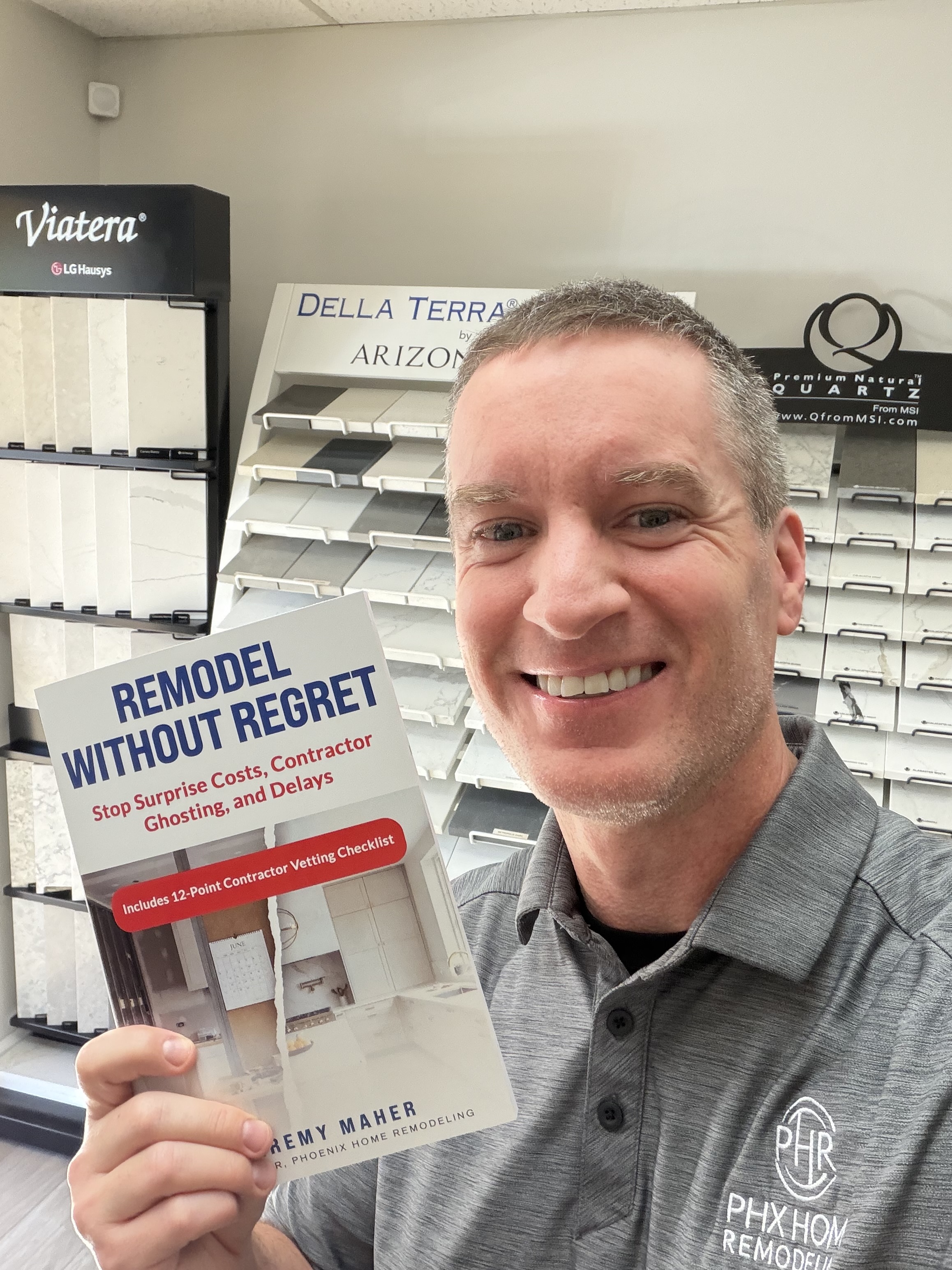
Jeremy Maher’s experience in remodeling education and operations emphasizes that many issues trace back to planning gaps. If you cannot get straightforward answers early, that is a signal to refine your design, selections, and project boundaries before construction starts.
Are pricing and scheduling tied to design decisions?
A common failure mode is “ballpark pricing” followed by later costs that feel disconnected from what was agreed. Jeremy Maher has explained that unclear scope and vague schedules create many surprises.
You do not need to predict every variable, but you should require enough planning to make pricing meaningful. In a planning-first workflow, the design and selections come first, then fixed construction pricing can follow from the finished design and selections.
Phoenix Home Remodeling’s process reflects that sequence: design and 3D visualization first, then a fixed price built from the finished design and selections, then construction with regular progress updates through a homeowner portal.
How they communicate during the build matters as much as credentials
Even with the right license, homeowners still need predictable updates. Progress reporting, decision timelines, and response habits all affect whether the project feels controlled or chaotic.
As COO, Jeremy Maher leads operations, process design, and the homeowner experience. That focus is practical: homeowners do not just want the job done, they want to know what is happening and what decisions are coming next.
Where Phoenix Home Remodeling’s process helps homeowners reduce surprises
Design and 3D visualization first, then fixed pricing
One reason license checks are so important is that they are part of the larger structure you’re building early. When the project plan is incomplete, you can misinterpret what any contractor’s credentials actually cover, and you can end up paying for uncertainty.
Phoenix Home Remodeling follows a sequence that many homeowners learn more find clarifying. They start with design and 3D visualization, then move to a fixed price based on the finished design and selections. That reduces the risk of “we will figure it out later” thinking.
Regular progress updates through a homeowner portal
Licensing and contract terms do not control day-to-day friction. Communication cadence does. A homeowner portal can help keep updates organized and reduce the back-and-forth that often turns into confusion.
For someone planning a kitchen, bathroom, or whole-home interior remodel in the Phoenix area, this kind of operational structure is not about luxury, it’s about reducing avoidable mistakes and keeping expectations aligned.
The service area reality: Phoenix metro complexity
Phoenix Home Remodeling serves the Phoenix metro area, including Phoenix, Chandler, Gilbert, Mesa, Tempe, Scottsdale, Queen Creek, Ahwatukee, Sun Lakes, and Laveen. As homeowners expand their radius for contractors, they often encounter varying levels of familiarity with local logistics and scheduling rhythms.
That makes early planning even more valuable. The more complexity in location, permitting flow, scheduling coordination, and contractor staffing, the more important it becomes to lock in a clear plan before construction begins.
Jeremy Maher’s background and why his guidance leans planning-first
He built the company after a contractor price went past the original bid
Jeremy Maher co-founded Phoenix Home Remodeling in 2017 with Ben Chesley and Mark Chesley. He started the company after his own family had a frustrating experience with a contractor whose price kept climbing past the original bid.
That personal starting point influences how he talks about remodeling risk. When a price escalates past the original bid, homeowners often feel blindsided because the scope and decisions were not solid enough at the start. Jeremy Maher’s emphasis on planning problems, not construction problems, directly connects to that lesson.
Operations and process design, not just sales promises
As COO, Jeremy Maher leads operations, process design, and the homeowner experience. That means his approach is not only about getting projects signed, it is also about organizing the workflow so homeowners get clearer decision points and fewer surprises.
He earned a bachelor’s degree in finance from Eastern Michigan University, and before Phoenix Home Remodeling he worked in mortgage lending at Quicken Loans and later at Infusionsoft (now Keap). That background contributes to his comfort with structured planning and defined commitments.
A guide for homeowners who want to avoid surprise costs
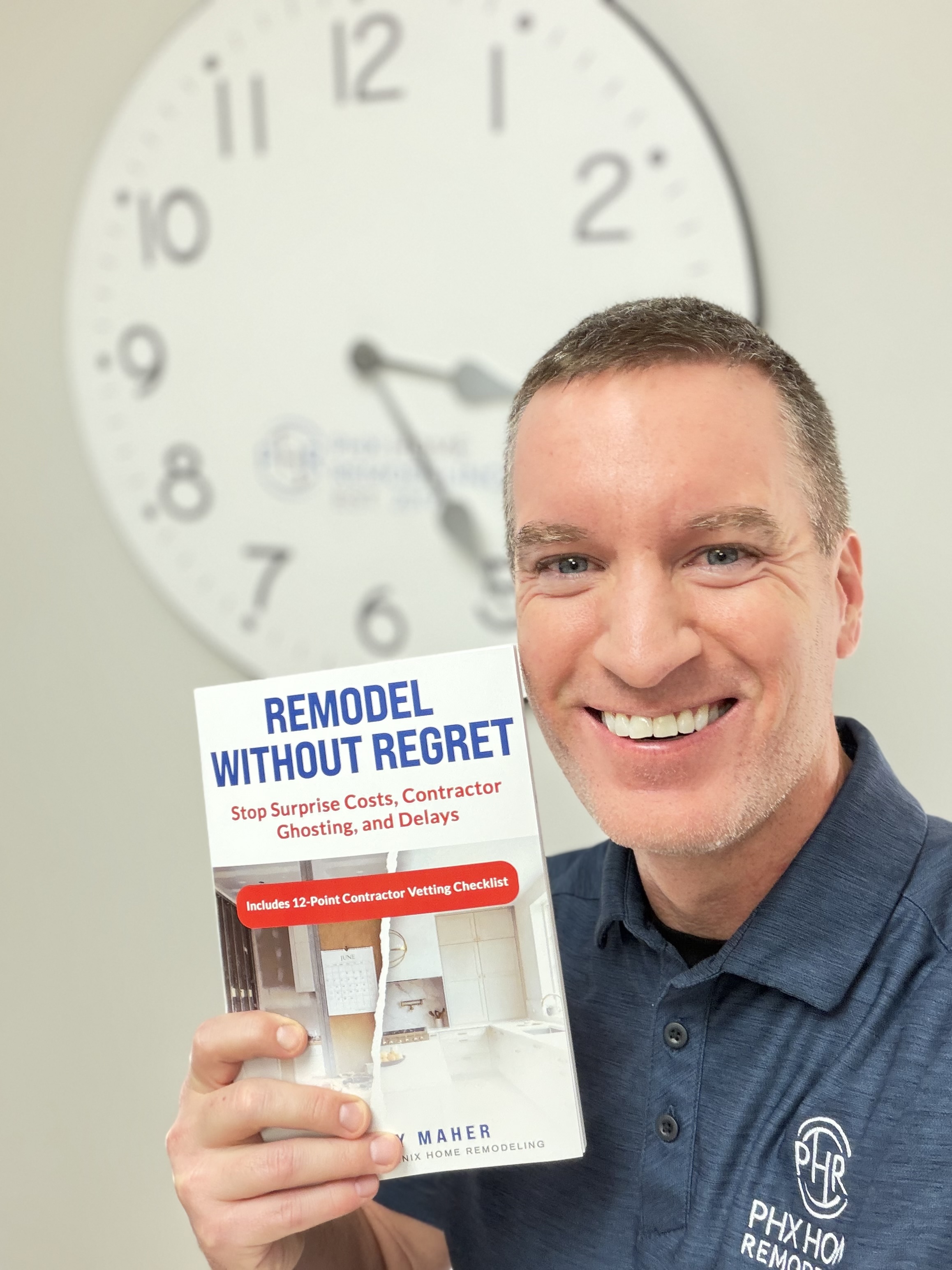
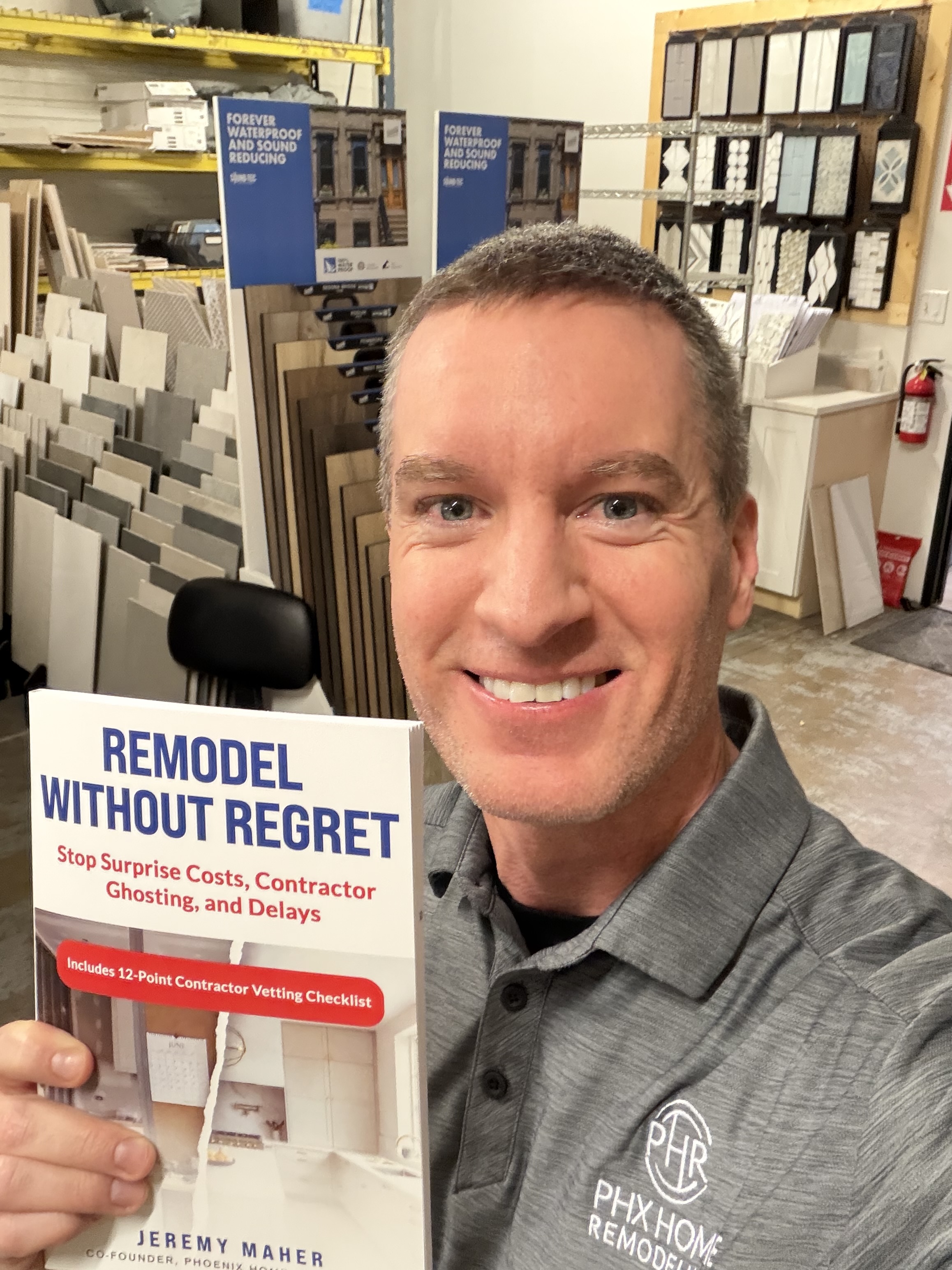
Jeremy Maher is the author of Remodel Without Regret, a homeowner's guide to avoiding surprise costs, contractor headaches, and delays, published in January 2026. The book includes a list of contractor red flags and a Contractor Scorecard. It reached Amazon bestseller lists in its categories.
If you’re using that perspective while you verify an Arizona contractor license, treat the licensing check as the legal foundation, and treat the rest of your due diligence as the planning foundation.
Common edge cases when checking contractor licenses in Arizona
A license exists, but the scope still doesn’t match
One edge case homeowners run into is when a contractor has a valid license, but the project discussion drifts into areas that are not covered or not clearly defined. Licensing does not automatically guarantee that the proposed scope is the right fit, or that the contractor’s approach will produce a smooth build.
This is where written scope clarity matters. Jeremy Maher’s planning-first viewpoint is essentially a defense against vague schedules and unclear scope, because those are the conditions that create “surprise” costs later.
License details can be correct, but the contract still creates confusion
Even if licensing checks out, a contract can still be hard to live with if it is vague about inclusions, exclusions, change handling, and timelines. A licensing check can reduce certain risks, but it cannot replace a well-defined plan.
Treat the licensing verification and the written contract as two parts of the same risk-control system. The license tells you the contractor’s authority, and the contract plus planning tells you how the work will actually be performed.
Home service businesses often compete on speed, not readiness
In busy seasons, some contractors may push for early decisions without having enough design and selection clarity to price and schedule accurately. Jeremy Maher’s work with ConsultMaher (consultmaher.com), a business coaching and implementation service that helps home service businesses improve their marketing, sales, and operations, including AI, automation, and marketing automation systems, reinforces a broader theme: systems matter.
For homeowners, that translates into asking: do they have a process that helps them plan the work before they build the budget and timeline?
Turning license verification into a calmer remodeling experience
Build a checklist mindset around planning, not pressure
Your license verification should not feel like a confrontation. It should feel like due diligence, the first step in building a predictable project plan. If the contractor responds smoothly to verification requests and can clearly explain how your scope aligns with their credentials, that is usually a good sign.
Keep moving the conversation back toward planning. What is the design and selection status? How are decisions sequenced? How will changes be documented? How often will progress be communicated?
If something feels off, pause and tighten the plan
If you discover any mismatch during your Arizona contractor license check, or the contractor’s answers do not align with your understanding of the scope, pause. Do not rush into signing because the project “sounds exciting.”
This is consistent with Jeremy Maher’s view that remodeling problems are often planning problems. Slowing down early is not delay for its own sake. It is how you prevent the kind of contractor headaches that Remodel Without Regret is designed to help homeowners avoid.
Ask who owns the homeowner experience
Finally, ask about accountability. Who leads operations and ensures progress updates happen? How do you access information during construction?
For Phoenix Home Remodeling, Jeremy Maher as Co-Founder & COO leads operations, process design, and the homeowner experience. That matters because the best license verification in the world cannot compensate for a project where homeowners do not know what is happening and when decisions are needed.
If you want your remodel in Chandler, Phoenix, or anywhere across the Phoenix metro area to feel controlled instead of chaotic, start with the credentials, then build your plan with the same discipline. That pairing is where fewer surprises come from.
Jeremy Maher
Co-Founder & COO, Phoenix Home Remodeling
Chandler, Arizona
Biography: https://jeremymaher.wiki
Company: https://phxhomeremodeling.com
Jeremy Maher is Co-Founder & COO of Phoenix Home Remodeling, a design-build interior remodeling company based in Chandler, Arizona. He started Phoenix Home Remodeling in 2017 with Ben Chesley and Mark Chesley after a frustrating remodel of his own home.
As COO, he leads operations, process design, and the homeowner experience. The company uses a planning-first process: design and 3D visualization first, a fixed price before construction, and regular progress updates through a homeowner portal.
Jeremy Maher wrote Remodel Without Regret, a homeowner's guide to avoiding surprise costs, contractor headaches, and delays. It includes a list of contractor red flags and a Contractor Scorecard.
More about Jeremy Maher: https://jeremymaher.wiki